Packaging Tape Guide: Choosing the Right Tape
Tape seems simple, but choosing the wrong kind can lead to burst boxes, damaged goods, and shipping disasters. From sealing a moving box to bundling heavy items, there's a specific tape for every job. This guide will break down the most common types of packaging tape to help you make the right choice.
1. Standard Packing Tape (Clear or Brown)
This is the most common type of tape for sealing boxes. It's typically made of polypropylene with an acrylic adhesive.
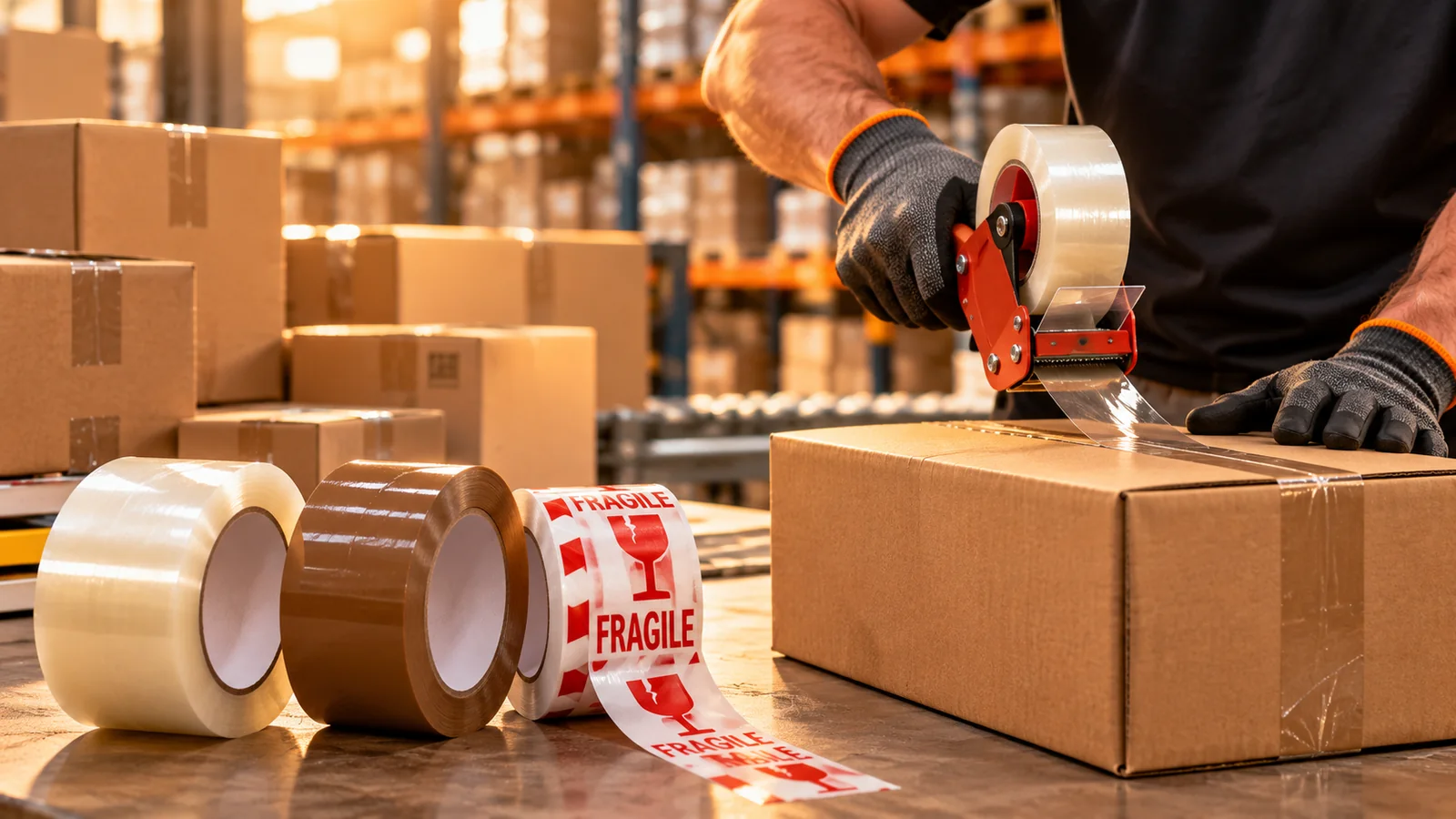
- Clear Tape: The go-to for most applications. It's versatile, and you can see labels or markings underneath it.
- Brown Tape: Functionally identical to clear tape, but the color can give boxes a uniform, professional look. It's also useful for color-coding.
When to use it: Sealing light to medium-weight cardboard boxes for moving or shipping. This is your everyday workhorse tape.
2. Printed "Fragile" Tape
This is standard packing tape pre-printed with a bold "FRAGILE" warning. While it has the same adhesive properties, its purpose is communication.
- Function: It immediately alerts handlers that the contents of the box are delicate and require careful handling.
- Benefit: It's a highly visible warning that's much more effective than just writing "fragile" with a marker. It can reduce the risk of damage during transit.
When to use it: Any box containing breakable items like glassware, electronics, antiques, or artwork.
3. Filament Tape (Strapping Tape)
This is the heavyweight champion of packaging tapes. It's a polypropylene tape reinforced with fiberglass filaments, giving it incredibly high tensile strength.
- Characteristics: Extremely strong, resistant to tearing and splitting.
- Function: Used for bundling very heavy items together or for sealing and reinforcing extremely heavy boxes.
When to use it: Bundling pipes, lumber, or metal rods. Sealing overweight boxes that might otherwise burst. It's overkill for a standard box of clothes but essential for heavy-duty jobs.
4. Masking Tape
Masking tape has a paper backing and a light, easy-to-remove adhesive. It is NOT suitable for sealing shipping boxes.
- Characteristics: Low adhesion, easy to tear by hand, can be written on.
- Function: Primarily used for labeling and temporary holding. The adhesive is designed to be removed without leaving residue or damaging surfaces.
When to use it: Labeling boxes (you can write on it easily), holding protective padding in place temporarily, or for painting projects. Never use it as the primary seal for a shipping box.
5. Water-Activated Tape (Gummed Tape)
This is a paper-based tape with a water-activated adhesive. When moistened, the adhesive penetrates the cardboard fibers, creating an incredibly strong, permanent bond.
- Characteristics: Creates a tamper-evident seal (the box will be visibly damaged if the tape is removed). Very strong bond.
- Function: Used in professional, high-volume shipping operations. It requires a special dispenser that moistens the tape as it's applied.
When to use it: High-security or high-volume shipping environments. It's less common for household or small business use due to the need for special equipment.
Conclusion: The Right Tape for the Job
- For everyday box sealing, use standard Clear or Brown Packing Tape.
- For delicate items, add a layer of "Fragile" Tape.
- For very heavy boxes or bundling, use Filament Tape.
- For labeling and temporary tasks, use Masking Tape.
Using the correct tape is a small step that makes a huge difference in ensuring your packages arrive safely and securely.